
New CE Standard System for 2022
author: Wendy Yang
2023-08-18

Joyan Safety company alrday Got the NEW CE certification as bellow System:
New Standard System:
EN ISO 20345:2022
Toe protection - 200J impact and 15kN compression
Toe protection - 200J impact and 15kN compression
EN ISO 20346:2022
Toe protection - 100J impact and 10kN compression
Toe protection - 100J impact and 10kN compression
EN ISO 20347:2022
No toe protection
No toe protection
EN ISO 20344:2021
Test method
Test method
EN ISO 20345:2022
4&5.3.7
The new standard clearly defines composite footwear as category III footwear and provides the requirements for composite footwear in Tables 2 and 16.
- Classification: SBH+ Additional Features
- Seam Strength: min. 10 N/mm, new requirement.
4&5.3.7
The new standard clearly defines composite footwear as category III footwear and provides the requirements for composite footwear in Tables 2 and 16.
- Classification: SBH+ Additional Features
- Seam Strength: min. 10 N/mm, new requirement.
Image
5.3.2 - Toe Protection
New requirements have been established for the base width of protective toe caps and impact after environmental treatment, according to EN ISO 22568-1 and -2.
- The base width of the metallic protective toe cap≤ 2mm.
- The base width of the non-metallic protective toe cap≤ 15mm.
- Three types of impacts after environmental treatment are required for non-metallic protective toe caps: high temperature, low temperature, and oil.
5.3.2 - Toe Protection
New requirements have been established for the base width of protective toe caps and impact after environmental treatment, according to EN ISO 22568-1 and -2.
- The base width of the metallic protective toe cap≤ 2mm.
- The base width of the non-metallic protective toe cap≤ 15mm.
- Three types of impacts after environmental treatment are required for non-metallic protective toe caps: high temperature, low temperature, and oil.
Image
5.3.5 - Slip Resistance
Basic requirements
5.3.5 - Slip Resistance
Basic requirements
If the sole of the footwear is not suitable for slip resistance (e.g., with studs), the symbol "Ø" must be displayed on the marking.
Ceramic tiles/detergent solution is the test interface/pollutant for the basic slip resistance requirement, and SRA/SRB/SRC has been cancelled.
- Heel-to-toe slip - COF≥0.31
- Forefoot-to-heel slip - COF≥0.36
- Forefoot-to-heel slip - COF≥0.36
6.2.10 - Slip Resistance
Additional requirements
Additional requirements
Ceramic tiles/glycerol slip resistance (SR) is an additional requirement.
- Heel-to-toe slip - COF≥0.19
- Forefoot-to-heel slip - COF≥0.22
- Forefoot-to-heel slip - COF≥0.22
5.4.6 - Breathability of Upper Materials
New requirements for non-breathable upper materials: percentage of non-breathable materials on the upper surface
- If the percentage of non-breathable materials on the upper surface≤10%, the breathability requirements of the upper materials are:
WVP ≥ 0.8 mg/(cm2·h) and WVC ≥ 15 mg/cm2
- If the percentage of non-breathable materials on the upper surface >10% and ≤ 25%, the breathability requirements of the upper materials are:
WVP ≥ 2.0 mg/(cm2·h)
5.7.3 - Midsole Abrasion Resistance
New determination requirement: after abrasion resistance test, the midsole thickness must be above 66% of the original thickness.
5.8.2.1 - Outsole Thickness
For cold-bonded outsoles with "curved gutter (dragon bone)" on the underside, the net thickness of the outsole ≥2mm.
For cold-bonded outsoles with "curved gutter (dragon bone)" on the underside, the net thickness of the outsole ≥2mm.
5.8.5 - Outsole Flexure
After flexure, if there is spontaneous cracking on the outsole and the steel plate breaks, it is considered a FAIL.
6.2.1 - Puncture Resistance
EN ISO 22568-3&4 defines three types of puncture resistance: P/PL/PS
- Type P: metal insert / 4.5mm nail, Min.1100N steel plate (large needle)
- Type PL: non-metal insert / 4.5mm nail, Min. 1100N non-metallic midsole (large needle)
- Type PS: non-metal insert / 3.0mm nail, Min. 1100N (950N) non-metallic midsole (small needle)
EN ISO 22568-3&4 defines three types of puncture resistance: P/PL/PS
- Type P: metal insert / 4.5mm nail, Min.1100N steel plate (large needle)
- Type PL: non-metal insert / 4.5mm nail, Min. 1100N non-metallic midsole (large needle)
- Type PS: non-metal insert / 3.0mm nail, Min. 1100N (950N) non-metallic midsole (small needle)
 Industry Prospect & Future Trends of Safety Footwear
 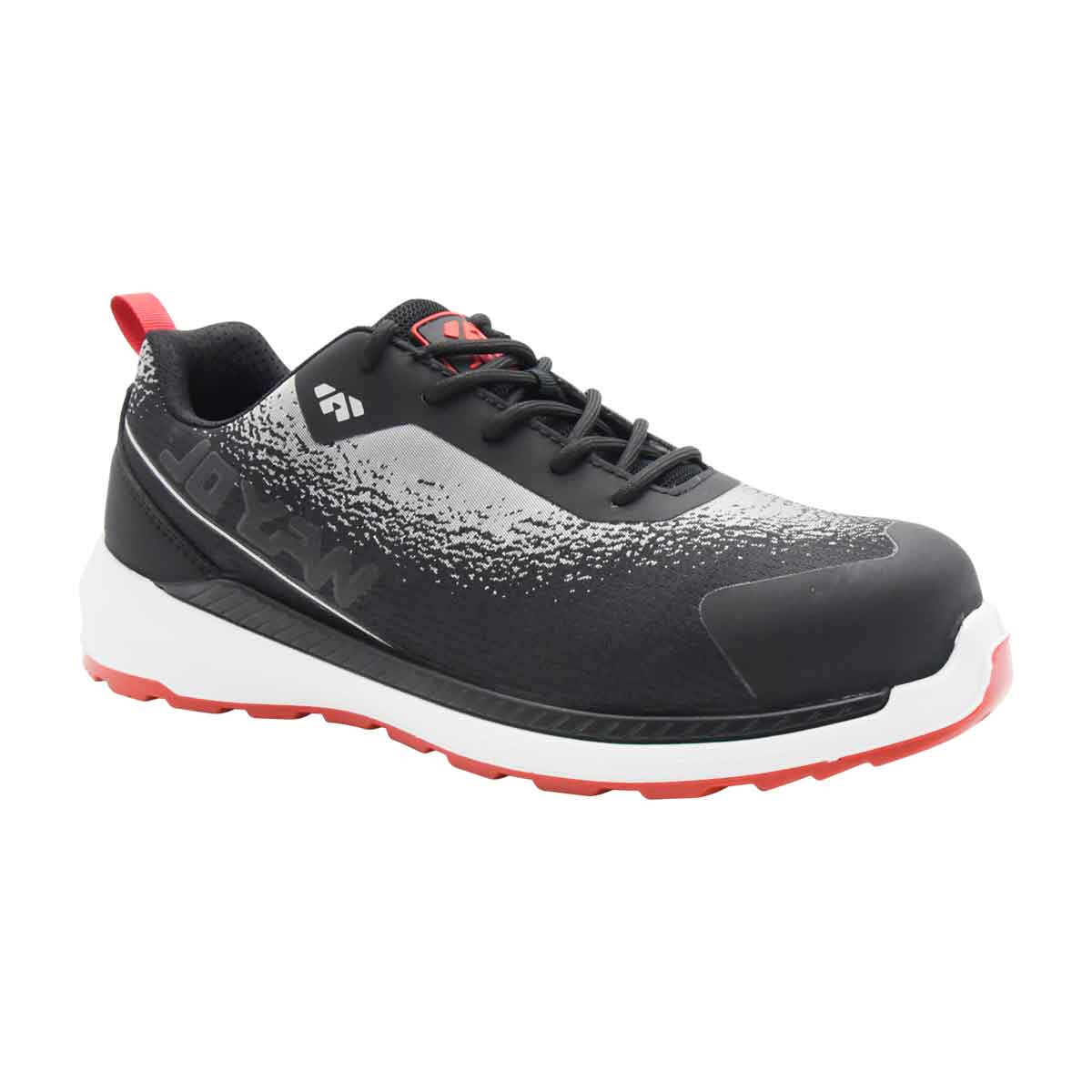 Safety Shoes: Solid Protection for Your Daily Work
  Types of safety shoe soles
  What is' outer yard 'and how does it affect container handling efficiency?
  Reasons for delayed customs clearance of goods
  What is MSDS? What is its function?
  Clearance Delay
  What are "sea freight consolidation" and "loss of cabin fee"?
  What is document consistency and how can we effectively achieve document consistency?
  How to save on ocean freight when shipping prices rise?
  Severe congestion! Ship queuing delays up to seven days
  How to prevent work shoes from sweating
  Just Now! Houthi forces attacked four ships in the Indian Ocean and Red Sea
  The Red Sea crisis is butterfly effect
  The port is paralyzed, and the import volume is "0"
  The container has been robbed! Port shutdown, shipping companies stop booking
  It's not safe to go around the Cape anymore!
  Container knowledge popularization
  Starting from June 3, 2024, new requirements will be introduced for goods entering EU customs!
  What is certificate of origin? What are the precautions?